Schedule
Switch the toggler to see what in-person or remote activities are held on June 12 & 16
The time below is shown in CET, the local time zone of Amsterdam
2026-06-12T05:00:00.000Z
2026-06-12T06:00:00.000Z
2026-06-12T07:00:00.000Z
2026-06-12T08:00:00.000Z
2026-06-12T09:00:00.000Z
2026-06-12T10:00:00.000Z
2026-06-12T11:00:00.000Z
2026-06-12T12:00:00.000Z
2026-06-12T13:00:00.000Z
2026-06-12T14:00:00.000Z
2026-06-12T15:00:00.000Z
2026-06-12T16:00:00.000Z
2026-06-12T17:00:00.000Z
2026-06-12T05:00:00.000Z
Registration
2026-06-12T07:10:00.000Z
Opening Ceremony
2026-06-12T07:30:00.000Z
What RSCs Can Do in Next.js Today

Aurora Scharff
Vercel
Building app-like UX on the web has historically meant reaching for an SPA. You ship the data layer to the browser, manage a client cache, juggle loading states, coordinate mutations, and write a lot of code to keep the UI feeling fast and fresh. The result can be great, but the cost is high, and the model gets harder to maintain as your app grows.Next.js takes a different path. Since React Server Components first landed, we’ve been working toward a way to build where each piece of your app runs where it belongs, while the mental model stays the same: components.
2026-06-12T07:50:00.000Z
QnA with Aurora Scharff
2026-06-12T08:10:00.000Z
This Component Could Have Been A Class

Scott Tolinski
Co-host of Syntax.fm
The web platform is not the same as it was in 2013, but many of us are still living in a world where every UI element is constructed from scratch in React. In this talk, Scott explores advancements in the web platform that can greatly simplify your React components while making them more accessible.
2026-06-12T08:30:00.000Z
QnA with Scott Tolinski
2026-06-12T08:45:00.000Z
Tanstack Start and How It Supports React Server Components

Manuel Schiller
React Server Components are powerful, but most implementations make them feel like a fixed, server-owned tree.TanStack Start takes a different approach: it treats RSC as data - server-rendered fragments the client can fetch, cache, and compose into its own UI tree.Because RSC fit into the same caching story as data, they can use TanStack Router’s built-in cache, TanStack Query, or other caches directly - without introducing a separate caching model just for components, while enabling fine-grained caching and invalidation.Built on TanStack Start’s existing primitives, the model also composes cleanly with middleware and with different rendering strategies, from streaming SSR to no SSR at all.
2026-06-12T09:05:00.000Z
QnA with Manuel Schiller
2026-06-12T09:15:00.000Z
Coffee break ☕
2026-06-12T09:45:00.000Z
A Guide to React Compiler Rendering

Mark Erikson
Replay.io
React is a library for "rendering" UI from components, but many users find themselves confused about how React rendering actually works. The new React Compiler promises to "automatically optimize your React app"... but what is it actually _doing_ to your component? How does that complex compiler-written code actually make your app faster?
2026-06-12T10:05:00.000Z
QnA with Mark Erikson
2026-06-12T10:20:00.000Z
How I use AI as a Technical Educator

Adrian Hajdin
JS Mastery
Over the past year, the way I build applications has changed dramatically. Projects that once took weeks now take days with the help of AI. But the biggest shift isn’t speed, it’s how I learn and how I teach.In this talk, I’ll share how I’ve started using AI not just as a coding assistant, but as a teaching layer inside my development workflow and content. I’ll walk through how I use AI to explore architectures, validate decisions, and iterate faster, and how I bring that same process into tutorials watched by millions of developers.This approach shifts learning from passive consumption to active collaboration.
2026-06-12T10:40:00.000Z
QnA with Adrian Hajdin
2026-06-12T10:55:00.000Z
Designing for Failure: The Senior React Dev's Production Toolkit
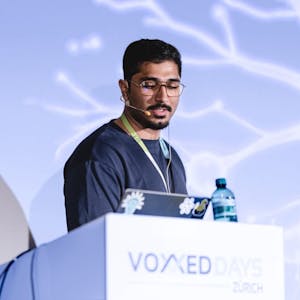
Faris Aziz
Smallpdf
It’s entirely possible to be a strong frontend engineer while remaining mostly oblivious to availability, SLAs, SLOs, and delivery metrics. Many teams are structured that way, and it works, until you want to increase your impact beyond the UI.This talk is about expanding the frontend perspective to include the system it lives in. Not to turn frontend engineers into SREs or platform specialists, but to build full-stack awareness that leads to better decisions, safer changes, and healthier delivery practices.We’ll look at resilience as a mindset across the software development lifecycle, and how practices like atomic changes, trunk-based development, feature flags, and automated rollbacks directly affect frontend work, even when the failures don’t originate in the UI. We’ll also connect these practices to availability targets, SLOs, and DORA metrics, and explain why failure tolerance is contextual, from highly regulated systems with near-zero tolerance to products where controlled failure is acceptable.The goal is to help frontend engineers understand how their work fits into the larger system, so they can ship faster, reduce risk, and increase their impact within a team without losing focus on frontend excellence.
2026-06-12T11:15:00.000Z
QnA with Faris Aziz
2026-06-12T11:25:00.000Z
Lunch 🥗
2026-06-12T12:25:00.000Z
Building Bridges to a Post-SPA Future

Alex Russell
Microsoft
SPAs were always based on contingent logic. For the benefits to materialise, users must spend a great deal of time in the same interface, updating state in-place. This never described the majority of experiences, where very little is persisted across screens and critical user journeys. As the industry moves away from SPAs and the frameworks they popularised, one of the largest hurdles for teams rethinking their approach is retaining the trust of managers who previously signed off on the very SPAs that now feel slow and shabby.
2026-06-12T12:45:00.000Z
QnA with Alex Russell
2026-06-12T13:00:00.000Z
We Need More Than Prompts

Alex Garrett-Smith
BitterBrains
Coding with an agent tends to settle into the same loop: prompt, check, re-prompt and repeat, burning time and tokens each pass. There's a better way, and it starts before any code gets written.This talk puts two approaches head to head: the prompt-and-iterate loop most of us have fallen into, and spec-driven development. You'll see what each one produces, and what a spec gives you that prompting can't, including decisions you can review before any code exists and context your whole team can build on.
2026-06-12T13:20:00.000Z
QnA with Alex Garrett-Smith
2026-06-12T13:35:00.000Z
Lightning Talks
• I Did Everything Wrong So You Don't Have To —
Angel Pichardo
• Taming the Flicker: Firebase Patterns for React Server Components —
Rosario Fernandes
• Framework Native Rendering Without Code Duplication? —
Stephen Cooper
• CLI, GUI, or Just Blind Trust? A Tour of Code Review Styles —
Santosh Yadav
2026-06-12T14:05:00.000Z
Coffee break ☕
2026-06-12T14:25:00.000Z
Panel Discussion: Fullstack is Eating Frontend — Should FE Engineers Adapt?

Kathryn Grayson Nanz,
Progress Software

Kevin Ball,
Mento
Scott Tolinski ,
Co-host of Syntax.fm

Sam Selikoff,
Vercel

Alem Tuzlak,
Code Forge

Ryan Skinner
rari
2026-06-12T15:05:00.000Z
Speed, Quality, and AI: You Can't Have It All (Or Can You?)

Gaauwe Rombouts
Zed
Every team building with AI faces the same tension: move fast and ship, or slow down and get it right. At Zed, we build an IDE obsessed with performance and quality. This means being brutally honest about where AI helps, where it hurts, and how we make decisions when the answer isn't obvious. This is the story of how we navigate that tension in practice — the tradeoffs, the mistakes, and the framework we've built for keeping quality alive when speed is the default.spectrum of dev workflows.
2026-06-12T15:25:00.000Z
QnA with Gaauwe Rombouts
2026-06-12T15:40:00.000Z
From Vibe Coding to Vibe Engineering

Kitze
React Academy
Web development has always moved in cycles of hype, from frameworks to tooling. With the rise of large language models, we're entering a new era of 'vibe coding,' where developers shape software through collaboration with AI rather than syntax. This talk explores what that means for the future of coding, especially in frontend development, and how it echoes the past while redefining what comes next.
2026-06-12T16:00:00.000Z
QnA with Kitze
2026-06-12T16:10:00.000Z
Closing Ceremony
2026-06-12T16:20:00.000Z
Break Before the Party
2026-06-12T17:30:00.000Z
🍾 After-party 🍾
2026-06-12T08:10:00.000Z
The Evolution of App Development

Kadi Kraman
Expo
2026-06-12T08:30:00.000Z
QnA with Kadi Kraman
2026-06-12T08:45:00.000Z
Ripple: the Good Parts of React, Svelte, and Solid

Erik Rasmussen
Throughout history, empires rise and fall. Throughtout web development, frameworks rise and fall. In 2026, we are firmly in "late stage React", where young devs can't remember the world any other way, and older devs are keeping their eye on the horizon for what's next.What if I told you there was a TypeScript-first UI framework created by a member of both the React _and_ Svelte core teams focused on fine-grained reactivity and rendering speed that will look instantly familiar to you?I'd like to introduce you to Ripple, show you around its syntax and philosophy and stimulate your mind out of the Present and into the Future.
2026-06-12T09:05:00.000Z
QnA with Erik Rasmussen
2026-06-12T09:15:00.000Z
Coffee break ☕
2026-06-12T09:45:00.000Z
Giving AI Agents Hands: Mobile Feedback Loops with Agent Device

Mike Grabowski
Callstack
AI coding agents can generate React Native code quickly, but they still need a reliable way to see, touch, debug, and verify the app they are changing. This talk introduces Agent Device, Callstack’s agent-native automation layer for mobile apps, and shows how it gives coding agents a practical feedback loop on iOS, Android, TV, and desktop targets.We’ll look at what that means in practice: how agents inspect the UI, interact with the app, collect evidence, profile React Native behavior, and turn exploratory work into replayable checks. Then we’ll show practical workflows for React Native teams: letting an agent implement and verify a feature, debugging a broken screen, turning exploratory QA into deterministic checks, and supporting AI-assisted migrations where implementation and testing feed into each other.The goal is to show how agent-assisted coding changes when the agent can work against the real app, not just the source code.
2026-06-12T10:05:00.000Z
QnA with Mike Grabowski
2026-06-12T10:20:00.000Z
Building RSCs Framework on Rust: Architecture Decisions That Delivered 45x Performance
Ryan Skinner
rari
After 25 years building for the web, I built rari: a React Server Components framework on Rust that delivers 45x higher throughput than Next.js. This talk is about the architecture decisions that made it possible.I'll walk through the three-layer architecture: a Rust runtime with embedded V8, RSC-aware Vite transformations, and true streaming SSR. You'll see why using V8 directly through Rust (not Node.js) changes everything, how correct 'use client' and 'use server' semantics matter more than expected, and what I got fundamentally wrong in my first implementation.When I fixed three pieces (app router support, true SSR, and correct RSC semantics) performance jumped from 4x to 45x. Not because Rust is inherently fast, but because the architecture finally matched React's design intentions.You'll learn concrete patterns for RSC streaming at the runtime level, trade-offs between ecosystem compatibility and performance, and how React Server Components actually work under the hood.
2026-06-12T10:40:00.000Z
QnA with Ryan Skinner
2026-06-12T10:55:00.000Z
What the First Rule of ARIA Really Means

Abbey Perini
Hygiena
ARIA, the Accessible Rich Internet Applications Suite, is a huge topic and full of hard concepts. Learning it becomes even more intimidating when you hear "the first rule of ARIA is don't use ARIA". This common adage doesn't mean ARIA will literally never make your webpage more accessible. Let's talk about what it really means.
2026-06-12T11:15:00.000Z
QnA with Abbey Perini
2026-06-12T11:25:00.000Z
Lunch 🥗
2026-06-12T12:25:00.000Z
The UI That Builds Itself: Exploring the Generative Front-End

Kiril Peyanski
Progress
Every modern app starts from the same truth: your website is built on data. Traditionally, developers define how that data turns into UI - the f in UI = f(data, state). But every user approaches your app with different goals, contexts, and focus, and a one-size-fits-all interface forces them to work around the UI instead of it working for them. In this talk, we’ll explore the Generative Front-End - a new paradigm where the logic that maps data to interface is itself generated by an LLM.
2026-06-12T12:45:00.000Z
QnA with Kiril Peyanski
2026-06-12T13:00:00.000Z
Ashes to Ashes, Spec to Spec: The Rebirth of Modern Testing

Younes Jaaidi
Software Cook | Marmicode
While tools like Jest, Jasmine, Karma, and Testing Library were always there when we needed them for testing our web apps, it's time to move on. In this talk, we'll revisit the battle scars they left behind, and explore how Vitest isn't just trendier — it's the result of hard-earned lessons in speed, reliability, and developer experience.You'll leave with:- A sense of closure for the old stack.- A tour of the modern features Vitest brings to the table.- Clarity on "Partial" vs. "Full" Browser Mode.- The anatomy of a maintainable test: Fakes, Object Mothers, and patterns that future-proof your specs.- A look at Testronaut — a testing companion that takes these patterns further.Come for the nostalgia. Stay for the clarity.
2026-06-12T13:20:00.000Z
QnA with Younes Jaaidi
2026-06-12T13:35:00.000Z
P2P React: Local-First State, Shared Truth

Mikkel Malmberg
Tether
Most apps treat the server as truth. Peer-to-peer flips that: state starts local, users carry the data, and shared truth emerges without routing every interaction through a central backend.Outline:- The normal React/backend model - Server/database as the source of truth- The local-first flip - Local state becomes the primary user experience- From local-first to peer-to-peer - Users replicate state directly instead of only syncing through APIs - Using a chat app as the running example, with quick comparisons to docs, boards, and media sharing- How shared truth emerges - User actions as signed operations in append-only logs - Deterministic app rules decide which operations are valid - Peers agree on ordering and can independently verify the resulting state- What this means for React developers - UI becomes a view over local replicated state- Reality check and takeaways - P2P does not remove backend complexity; it turns it into protocol and state design - Tradeoffs include availability, permissions, conflict handling, and migrations - These are normal apps with a different source of truth — and they're possible nowWill keep it high-level, practical, and example-driven. Including some lessons from building real peer-to-peer apps like Keet.
2026-06-12T13:55:00.000Z
QnA with Mikkel Malmberg
2026-06-12T14:05:00.000Z
Coffee break ☕
2026-06-12T14:25:00.000Z
Hackathon Closing
2026-06-12T08:00:00.000Z
Unconference: Rethinking Engineering Careers in the AI Era

Violina Popova,
ClipMyHorse.TV
Kevin Ball
Mento
2026-06-12T13:00:00.000Z
AI Unconference

Johannes Goslar,
Synthesia

Tobbe Lundberg,
CedarJS

Konstantin Klimashevich,
Uber
Kitze,
React Academy
Adrian Hajdin,
JS Mastery
Alem Tuzlak
Code Forge
2026-06-12T15:00:00.000Z
Fullstack is Eating Frontend - Should FE Engineers Adapt?
Konstantin Klimashevich,
Uber
Violina Popova
ClipMyHorse.TV