Schedule
Switch the toggler to see what in-person or remote activities are held on June 12 & 16
Times below are shown in your local browsers time zone.
2026-06-12T12:00:00.000Z
2026-06-12T13:00:00.000Z
2026-06-12T14:00:00.000Z
2026-06-12T15:00:00.000Z
2026-06-12T16:00:00.000Z
2026-06-12T17:00:00.000Z
2026-06-12T18:00:00.000Z
2026-06-12T19:00:00.000Z
2026-06-12T12:15:00.000Z
Opening
2026-06-12T12:25:00.000Z
Building Bridges to a Post-SPA Future

Alex Russell
Microsoft
SPAs were always based on contingent logic. For the benefits to materialise, users must spend a great deal of time in the same interface, updating state in-place. This never described the majority of experiences, where very little is persisted across screens and critical user journeys. As the industry moves away from SPAs and the frameworks they popularised, one of the largest hurdles for teams rethinking their approach is retaining the trust of managers who previously signed off on the very SPAs that now feel slow and shabby.
2026-06-12T12:45:00.000Z
QnA with Alex Russell
2026-06-12T13:00:00.000Z
We Need More Than Prompts

Alex Garrett-Smith
BitterBrains
Coding with an agent tends to settle into the same loop: prompt, check, re-prompt and repeat, burning time and tokens each pass. There's a better way, and it starts before any code gets written.This talk puts two approaches head to head: the prompt-and-iterate loop most of us have fallen into, and spec-driven development. You'll see what each one produces, and what a spec gives you that prompting can't, including decisions you can review before any code exists and context your whole team can build on.
2026-06-12T13:20:00.000Z
QnA with Alex Garrett-Smith
2026-06-12T13:35:00.000Z
Lightning Talks
• I Did Everything Wrong So You Don't Have To —
Angel Pichardo
• Taming the Flicker: Firebase Patterns for React Server Components —
Rosario Fernandes
• Framework Native Rendering Without Code Duplication? —
Stephen Cooper
• CLI, GUI, or Just Blind Trust? A Tour of Code Review Styles —
Santosh Yadav
2026-06-12T14:05:00.000Z
Break
2026-06-12T14:25:00.000Z
Panel Discussion: Fullstack is Eating Frontend — Should FE Engineers Adapt?

Kathryn Grayson Nanz,
Progress Software

Kevin Ball,
Mento

Scott Tolinski ,
Co-host of Syntax.fm

Sam Selikoff,
Vercel

Alem Tuzlak,
Code Forge

Ryan Skinner
rari
2026-06-12T15:05:00.000Z
Speed, Quality, and AI: You Can't Have It All (Or Can You?)

Gaauwe Rombouts
Zed
Every team building with AI faces the same tension: move fast and ship, or slow down and get it right. At Zed, we build an IDE obsessed with performance and quality. This means being brutally honest about where AI helps, where it hurts, and how we make decisions when the answer isn't obvious. This is the story of how we navigate that tension in practice — the tradeoffs, the mistakes, and the framework we've built for keeping quality alive when speed is the default.spectrum of dev workflows.
2026-06-12T15:25:00.000Z
QnA with Gaauwe Rombouts
2026-06-12T15:40:00.000Z
From Vibe Coding to Vibe Engineering

Kitze
React Academy
Web development has always moved in cycles of hype, from frameworks to tooling. With the rise of large language models, we're entering a new era of 'vibe coding,' where developers shape software through collaboration with AI rather than syntax. This talk explores what that means for the future of coding, especially in frontend development, and how it echoes the past while redefining what comes next.
2026-06-12T16:00:00.000Z
QnA with Kitze
2026-06-12T16:10:00.000Z
Break
2026-06-12T16:25:00.000Z
What RSCs Can Do in Next.js Today

Aurora Scharff
Vercel
Building app-like UX on the web has historically meant reaching for an SPA. You ship the data layer to the browser, manage a client cache, juggle loading states, coordinate mutations, and write a lot of code to keep the UI feeling fast and fresh. The result can be great, but the cost is high, and the model gets harder to maintain as your app grows.Next.js takes a different path. Since React Server Components first landed, we’ve been working toward a way to build where each piece of your app runs where it belongs, while the mental model stays the same: components.
2026-06-12T16:50:00.000Z
QnA with Aurora Scharff
2026-06-12T17:00:00.000Z
This Component Could Have Been A Class
Scott Tolinski
Co-host of Syntax.fm
The web platform is not the same as it was in 2013, but many of us are still living in a world where every UI element is constructed from scratch in React. In this talk, Scott explores advancements in the web platform that can greatly simplify your React components while making them more accessible.
2026-06-12T17:25:00.000Z
QnA with Scott Tolinski
2026-06-12T17:35:00.000Z
Tanstack Start and How It Supports React Server Components

Manuel Schiller
React Server Components are powerful, but most implementations make them feel like a fixed, server-owned tree.TanStack Start takes a different approach: it treats RSC as data - server-rendered fragments the client can fetch, cache, and compose into its own UI tree.Because RSC fit into the same caching story as data, they can use TanStack Router’s built-in cache, TanStack Query, or other caches directly - without introducing a separate caching model just for components, while enabling fine-grained caching and invalidation.Built on TanStack Start’s existing primitives, the model also composes cleanly with middleware and with different rendering strategies, from streaming SSR to no SSR at all.
2026-06-12T18:00:00.000Z
QnA with Manuel Schiller
2026-06-12T18:10:00.000Z
A Guide to React Compiler Rendering

Mark Erikson
Replay.io
React is a library for "rendering" UI from components, but many users find themselves confused about how React rendering actually works. The new React Compiler promises to "automatically optimize your React app"... but what is it actually _doing_ to your component? How does that complex compiler-written code actually make your app faster?
2026-06-12T18:35:00.000Z
QnA with Mark Erikson
2026-06-12T18:45:00.000Z
How I use AI as a Technical Educator

Adrian Hajdin
JS Mastery
Over the past year, the way I build applications has changed dramatically. Projects that once took weeks now take days with the help of AI. But the biggest shift isn’t speed, it’s how I learn and how I teach.In this talk, I’ll share how I’ve started using AI not just as a coding assistant, but as a teaching layer inside my development workflow and content. I’ll walk through how I use AI to explore architectures, validate decisions, and iterate faster, and how I bring that same process into tutorials watched by millions of developers.This approach shifts learning from passive consumption to active collaboration.
2026-06-12T19:10:00.000Z
QnA with Adrian Hajdin
2026-06-12T19:20:00.000Z
Designing for Failure: The Senior React Dev's Production Toolkit

Faris Aziz
Smallpdf
It’s entirely possible to be a strong frontend engineer while remaining mostly oblivious to availability, SLAs, SLOs, and delivery metrics. Many teams are structured that way, and it works, until you want to increase your impact beyond the UI.This talk is about expanding the frontend perspective to include the system it lives in. Not to turn frontend engineers into SREs or platform specialists, but to build full-stack awareness that leads to better decisions, safer changes, and healthier delivery practices.We’ll look at resilience as a mindset across the software development lifecycle, and how practices like atomic changes, trunk-based development, feature flags, and automated rollbacks directly affect frontend work, even when the failures don’t originate in the UI. We’ll also connect these practices to availability targets, SLOs, and DORA metrics, and explain why failure tolerance is contextual, from highly regulated systems with near-zero tolerance to products where controlled failure is acceptable.The goal is to help frontend engineers understand how their work fits into the larger system, so they can ship faster, reduce risk, and increase their impact within a team without losing focus on frontend excellence.
2026-06-12T19:45:00.000Z
QnA with Faris Aziz
2026-06-12T19:55:00.000Z
Closing
2026-06-12T12:15:00.000Z
Opening
2026-06-12T12:25:00.000Z
The UI That Builds Itself: Exploring the Generative Front-End

Kiril Peyanski
Progress
Every modern app starts from the same truth: your website is built on data. Traditionally, developers define how that data turns into UI - the f in UI = f(data, state). But every user approaches your app with different goals, contexts, and focus, and a one-size-fits-all interface forces them to work around the UI instead of it working for them. In this talk, we’ll explore the Generative Front-End - a new paradigm where the logic that maps data to interface is itself generated by an LLM.
2026-06-12T12:45:00.000Z
QnA with Kiril Peyanski
2026-06-12T13:00:00.000Z
Ashes to Ashes, Spec to Spec: The Rebirth of Modern Testing

Younes Jaaidi
Software Cook | Marmicode
While tools like Jest, Jasmine, Karma, and Testing Library were always there when we needed them for testing our web apps, it's time to move on. In this talk, we'll revisit the battle scars they left behind, and explore how Vitest isn't just trendier — it's the result of hard-earned lessons in speed, reliability, and developer experience.You'll leave with:- A sense of closure for the old stack.- A tour of the modern features Vitest brings to the table.- Clarity on "Partial" vs. "Full" Browser Mode.- The anatomy of a maintainable test: Fakes, Object Mothers, and patterns that future-proof your specs.- A look at Testronaut — a testing companion that takes these patterns further.Come for the nostalgia. Stay for the clarity.
2026-06-12T13:20:00.000Z
QnA with Younes Jaaidi
2026-06-12T13:35:00.000Z
P2P React: Local-First State, Shared Truth

Mikkel Malmberg
Tether
Most apps treat the server as truth. Peer-to-peer flips that: state starts local, users carry the data, and shared truth emerges without routing every interaction through a central backend.Outline:- The normal React/backend model - Server/database as the source of truth- The local-first flip - Local state becomes the primary user experience- From local-first to peer-to-peer - Users replicate state directly instead of only syncing through APIs - Using a chat app as the running example, with quick comparisons to docs, boards, and media sharing- How shared truth emerges - User actions as signed operations in append-only logs - Deterministic app rules decide which operations are valid - Peers agree on ordering and can independently verify the resulting state- What this means for React developers - UI becomes a view over local replicated state- Reality check and takeaways - P2P does not remove backend complexity; it turns it into protocol and state design - Tradeoffs include availability, permissions, conflict handling, and migrations - These are normal apps with a different source of truth — and they're possible nowWill keep it high-level, practical, and example-driven. Including some lessons from building real peer-to-peer apps like Keet.
2026-06-12T13:55:00.000Z
QnA with Mikkel Malmberg
2026-06-12T14:05:00.000Z
Break
2026-06-12T14:15:00.000Z
The Evolution of App Development

Kadi Kraman
Expo
2026-06-12T14:40:00.000Z
QnA with Kadi Kraman
2026-06-12T14:50:00.000Z
Ripple: the Good Parts of React, Svelte, and Solid

Erik Rasmussen
Throughout history, empires rise and fall. Throughtout web development, frameworks rise and fall. In 2026, we are firmly in "late stage React", where young devs can't remember the world any other way, and older devs are keeping their eye on the horizon for what's next.What if I told you there was a TypeScript-first UI framework created by a member of both the React _and_ Svelte core teams focused on fine-grained reactivity and rendering speed that will look instantly familiar to you?I'd like to introduce you to Ripple, show you around its syntax and philosophy and stimulate your mind out of the Present and into the Future.
2026-06-12T15:15:00.000Z
QnA with Erik Rasmussen
2026-06-12T15:25:00.000Z
Giving AI Agents Hands: Mobile Feedback Loops with Agent Device

Mike Grabowski
Callstack
AI coding agents can generate React Native code quickly, but they still need a reliable way to see, touch, debug, and verify the app they are changing. This talk introduces Agent Device, Callstack’s agent-native automation layer for mobile apps, and shows how it gives coding agents a practical feedback loop on iOS, Android, TV, and desktop targets.We’ll look at what that means in practice: how agents inspect the UI, interact with the app, collect evidence, profile React Native behavior, and turn exploratory work into replayable checks. Then we’ll show practical workflows for React Native teams: letting an agent implement and verify a feature, debugging a broken screen, turning exploratory QA into deterministic checks, and supporting AI-assisted migrations where implementation and testing feed into each other.The goal is to show how agent-assisted coding changes when the agent can work against the real app, not just the source code.
2026-06-12T15:50:00.000Z
QnA with Mike Grabowski
2026-06-12T16:00:00.000Z
Building RSCs Framework on Rust: Architecture Decisions That Delivered 45x Performance
Ryan Skinner
rari
After 25 years building for the web, I built rari: a React Server Components framework on Rust that delivers 45x higher throughput than Next.js. This talk is about the architecture decisions that made it possible.I'll walk through the three-layer architecture: a Rust runtime with embedded V8, RSC-aware Vite transformations, and true streaming SSR. You'll see why using V8 directly through Rust (not Node.js) changes everything, how correct 'use client' and 'use server' semantics matter more than expected, and what I got fundamentally wrong in my first implementation.When I fixed three pieces (app router support, true SSR, and correct RSC semantics) performance jumped from 4x to 45x. Not because Rust is inherently fast, but because the architecture finally matched React's design intentions.You'll learn concrete patterns for RSC streaming at the runtime level, trade-offs between ecosystem compatibility and performance, and how React Server Components actually work under the hood.
2026-06-12T16:25:00.000Z
QnA with Ryan Skinner
2026-06-12T16:35:00.000Z
What the First Rule of ARIA Really Means

Abbey Perini
Hygiena
ARIA, the Accessible Rich Internet Applications Suite, is a huge topic and full of hard concepts. Learning it becomes even more intimidating when you hear "the first rule of ARIA is don't use ARIA". This common adage doesn't mean ARIA will literally never make your webpage more accessible. Let's talk about what it really means.
2026-06-12T17:00:00.000Z
QnA with Abbey Perini
2026-06-12T17:10:00.000Z
Closing
2026-06-12T13:00:00.000Z
AI Unconference

Johannes Goslar,
Synthesia

Tobbe Lundberg,
CedarJS

Konstantin Klimashevich,
Uber
Kitze,
React Academy
Adrian Hajdin,
JS Mastery
Alem Tuzlak
Code Forge
2026-06-12T15:00:00.000Z
Fullstack is Eating Frontend - Should FE Engineers Adapt?
Konstantin Klimashevich,
Uber

Violina Popova
ClipMyHorse.TV
Times below are shown in your local browsers time zone.
2026-06-16T13:00:00.000Z
2026-06-16T14:00:00.000Z
2026-06-16T15:00:00.000Z
2026-06-16T16:00:00.000Z
2026-06-16T17:00:00.000Z
2026-06-16T18:00:00.000Z
2026-06-16T13:00:00.000Z
Opening
2026-06-16T13:05:00.000Z
Modernizing Your React App: Compiler, useEffectEvent, Activity & Friends

Vitor Alencar
Chilipiper
React has changed a lot in the last year: React 19, 19.1 and now 19.2 brought a stable React Compiler, new hooks like useEffectEvent, the <Activity /> API, and better SSR primitives such as Partial Pre rendering. And moreIn this talk we’ll take a demo React app that’s full of effects, memoization and “old school” patterns, and modernize it step by step
2026-06-16T13:30:00.000Z
Skills in Claude Code Desktop: Architecture and Execution Runtime
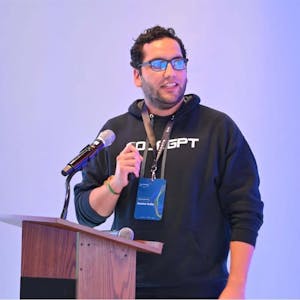
Daniel Ávila
Hedgineer
A technical breakdown of how the Claude Code Desktop runtime discovers, loads, and executes Skills. We'll cover the SKILL.md spec beyond the basics, frontmatter parsing, description-based triggering, file system scoping, and how skills compose with MCP and hooks in a single session.Then the practical side: what makes a skill trigger reliably, how to scope it without bloating context, and the common failure modes when moving from CLI to Desktop.
2026-06-16T13:55:00.000Z
React Bits: The Art of Standout UI

David Haz
React Bits
2026-06-16T14:20:00.000Z
FWD: Urgent Opportunity to Claim Your React + MDX Newsletter Inheritance

César Alberca
Freelance Frontend Architect
Hello, dear friend,I trust this message reaches you in excellent spirits. I write to you not only as a humble developer, but as the sole surviving heir of an ancient lineage of engineers whose wisdom has been carefully safeguarded through centuries.With great urgency, I invite you to transfer a modest administrative fee to the secure digital vault. In return, you shall gain access to an extraordinary fortune of technical insight. This privileged knowledge includes the steps required to craft a complete Newsletter system using React and MDX, as well as the instructions needed to dispatch your first email with Resend.Your generous cooperation will open the gates to revelations about the Newsletter Architecture, rendering emails on the web, layout traps in different email clients, automation with CI/CD, and those unsuspecting details that have bankrupted many brave developers before you.I remain eternally grateful for your imminent collaboration.
2026-06-16T14:40:00.000Z
Conquering React Concurrency

Ariel Shulman
Factify
When React 18 was released with the first concurrent features, the documentation clearly stated, “The most important addition in React 18 is something we hope you never have to think about: concurrency.”It’s been a few years, and by now it’s clear that this statement was optimistic. You definitely need to think about concurrency if you want to unlock the full potential of modern React features.In this deep-dive session, we’ll travel between several domains—from classic computer science theory and operating systems to UX and user psychology—before finally deep-diving into React’s reconciler over the years. By the end of this session, you can expect to have a deep understanding of React’s concurrent features—from Suspense and useTransition to useDeferredValue and the brand-new Activity component.But more important than understanding these specific features is obtaining the theory and knowledge to understand any future concurrent features as they are released.
2026-06-16T15:05:00.000Z
Break
2026-06-16T15:10:00.000Z
Real-World Hydration and Rendering Patterns in Modern React Apps

Raju Dandigam
Navan
One of the exciting things about web development is that the underlying technology that we use is constantly evolving. It’s hard to believe, but Server Components, partial hydration and hybrid rendering are no longer experimental features and are here to stay. With more projects adopting these newer patterns for client side rendering, the challenge now is to ensure that these applications can scale and that there are not new performance and reliability challenges that have not yet been fully considered. We’ve begun to encounter a wide range of new issues that include hydration behavior that doesn’t work the same way every time, rendering waterfalls, delayed streams and more, as well as some of the more subjective performance regressions.So you’ve built this amazing React app, and now it’s time to deploy it to production.
2026-06-16T15:30:00.000Z
Gotta Go Fast: React at 60 FPS

Rachel Kaufman
Attentive
How can you create performant animations, backed by fast-updating data, on the web, using React?Come learn how to make silky-smooth data-powered animations without having to give up the convenience of React. (Mostly…)React is great for manipulating the DOM, but all that shadow DOM logic can bog down data-powered animations and slow down sites. There’s a trick to getting it right (and, spoiler alert, some of it’s not React). We’ll go through a real-world case-study and along the way, learn about:- how to get data from the backend to your frontend mega-fast- why requestAnimationFrame beats setInterval hands down- the power of HTML Canvas for web-based animationCome see how fast React can be!
2026-06-16T15:45:00.000Z
Operating at the Edge: What Extreme Environments Teach Us About AI Systems

Michal Ziso
theZISO Creative Disruption Platform
AI has made building software faster, but it has also quietly changed the environment engineers are operating in. Responsibility hasn’t disappeared; it has concentrated. Decisions are harder to trace, failures are harder to localize, and humans remain accountable inside systems they no longer fully control.Drawing from experience designing systems for extreme environments, where visibility is limited, failure cascades, and human limits must be designed for, this talk reframes AI-assisted development as an operational challenge, not a tooling one. It introduces a different lens: treating AI-driven systems as architecture that must be operated like extreme environments, instead of faster versions of normal ones.
2026-06-16T16:05:00.000Z
React vs. Real-Time: Build Real-Time Features Without Fighting the Framework

Shubham Gautam
Headout
Most React applications treat state as the single source of truth. But what happens when time itself lives outside React?While building a production multi-track timeline engine, we discovered that the Web Audio transport, not React state had to become the canonical timeline. In this talk, we will explore how we designed a channel-based audio graph and canvas-rendered editor around an external high-precision clock, enabling deterministic synchronization of externally generated audio and media, 60fps rendering, and zero-reload state updates without letting React’s reconciliation interfere with real-time guarantees.
2026-06-16T16:30:00.000Z
Break
2026-06-16T16:35:00.000Z
Stop Guessing Your API: Contract-First React with OpenAPI
Violina Popova
ClipMyHorse.TV
By 2025, our React and React Native apps were struggling with inconsistent APIs, causing bugs, duplicated work, and slow onboarding. We adopted a schema-driven workflow with OpenAPI, generating type-safe TypeScript clients and enabling AI-assisted development of hooks, components, and tests. This talk shares our real-world lessons, practical strategies, and incremental approach to ship features faster and more reliably across web and mobile.
2026-06-16T17:05:00.000Z
Architecting Reliable React Systems in Unreliable Environments

Rajni Gediya
Hinge Health
React applications often assume predictable environments — stable networks, ordered responses, and linear state transitions. But real-world systems don’t behave that way.What happens when your React app communicates with something unreliable — streaming data, AI pipelines, background processes, or hardware devices that disconnect without warning?In this talk, I’ll share a production case study of architecting reliable React Native systems in highly asynchronous environments. Using Bluetooth communication as an extreme stress test, we’ll explore how to design deterministic state transitions, prevent race conditions, avoid retry storms, and keep UI truth aligned with external system reality.This session focuses on architecture and reliability patterns — not just libraries — and offers practical strategies for building resilient, production-grade React systems when the world outside your UI refuses to behave.
2026-06-16T17:40:00.000Z
Protecting Your Cookies from Hackers and Hungry Developers!

Mohamad Shiralizadeh
ING
We will explore how attackers steal browser cookies and session data, even with modern protections in place. The session showcases real-world techniques used in post-exploitation to extract sensitive information. It highlights the need for developers and defenders to understand browser internals and encryption to stay ahead of threats.
2026-06-16T18:05:00.000Z
React Performance Patterns That Break Down in Long-Running Production Apps

Himanshu Srivastava
BIK.ai
Modern React tooling keeps improving, yet many teams still struggle with performance regressions that appear months after launch. This talk explores common React patterns that look correct early on but quietly degrade performance as applications grow, and how to reason about them before they become costly to fix.
2026-06-16T18:25:00.000Z
React on the Edge

Ameer Sami
S&C Electric
We all know React as the community favorite library for developing web and mobile but what about devices on the edge? Edge/Embedded devices have significant restrictions on resources (memory, disk space, and compute) but that doesn't mean React can't be deployed to them. In this talk we'll discuss some tips and tricks you can use to develop and deploy applications to edge devices. Even if you are not developing applications for the edge you'll walk away from this talk knowing how to decrease the resource usage of your React applications.
2026-06-16T18:45:00.000Z
Closing
2026-06-16T13:00:00.000Z
Opening
2026-06-16T13:05:00.000Z
Pocket Guide to Seniority

Krasimir Tsonev
Antidote.me
Many developers believe seniority is something that happens automatically with time. In practice, some engineers repeat the same year of experience for a decade, while others grow rapidly by changing how they approach problems, people, and responsibility. This talk explores the mindset and behaviors that define effective senior engineers. The content is drawn from real industry experience and consolidated into the book "Pocket Guide to Seniority", turning years of lessons, failures, and team dynamics into practical guidance.
2026-06-16T13:30:00.000Z
Your React App Doesn't Need All That JavaScript

Jemima Abu
CAIS, Product Engineer
Should we be using a state management library to toggle dark mode? Do we really need a custom hook for opening an accordion? And how many event listeners is too many when animating on scroll?React gives us an incredibly powerful way to build UI, but not every UI behaviour needs React level machinery.In this talk, we’ll take a look at how to use HTML and CSS to build simpler alternatives to common interactive components such as accordions, modals, scroll transitions, carousels etc We’ll also take a look at the performance and accessibility benefits and real-life applications and use-cases of these components. The goal is to simplify how we handle content, display and animation using native browser features and leaving React to do what it's best at: everything else.
2026-06-16T13:55:00.000Z
Effective Strategies for Managing Remote Frontend Teams

Martin Asenov Mladenov
Sesame Online
We’ll dive into proven methods for building and sustaining high-performing remote teams. You’ll gain insights into maintaining seamless communication, promoting a positive team culture, and using the right tools for project success. We’ll also tackle the common hurdles, such as time zone coordination, maintaining code quality, and keeping team engagement high. Walk away with practical solutions and strategies that you can implement immediately to enhance your team’s remote collaboration.
2026-06-16T14:15:00.000Z
From Figma to TV & Beyond: Scaling React UI with Design Tokens & MCP

Seungho Park
LG Electronics
How do you scale a React UI system from Smart TVs to refrigerators, washing machines, and more while keeping everything consistent? This talk shares our real-world experience extending a React-based UI component system (initially built for webOS TV) into a multi-platform design system in collaboration with Figma. Moving beyond traditional handoffs, you will learn how we connected design and development to "design once and scale everywhere" using a robust Design Token architecture, CI/CD automation, and an AI workflow that leverages the Figma MCP to generate exact component code.
2026-06-16T14:35:00.000Z
Break
2026-06-16T14:40:00.000Z
Scaling React: What Actually Matters

Tathagat Thapliyal
Simbian
React often gets blamed when applications feel sluggish."We need to migrate.""We need a new framework.""React can’t handle scale."But what if React isn’t the problem?In this talk, we’ll challenge one of the most common assumptions in frontend engineering: that the framework is responsible for poor performance. Through real-world production patterns and architectural examples, we’ll uncover what actually breaks as applications scale - and why most performance issues stem from our decisions, not React itself.We’ll explore how over-rendering, global state misuse, network waterfalls, third-party script bloat, and poorly applied SSR strategies quietly degrade performance long before React becomes a bottleneck.This session is not about micro-optimizing hooks.It’s about thinking like a frontend architect.
2026-06-16T15:10:00.000Z
Mess to Modern: Refactoring a React Nightmare

Kaleb Garner
HaloMD
Have you ever been handed a React project that felt like navigating barbed wire? 900-line components, endless useEffects, and zero modularity. Join me as we take a real-world React nightmares and refactor it live! We’ll move from an over-engineered mess to a performant, scalable app by mastering predictable state management, centralized data handling, and domain-driven structure.
2026-06-16T15:30:00.000Z
The Web is Your A11y — Building Accessible Web Apps By Using the Platform

Julian Burr
Sonar
The web comes accessible out of the box, we just need to know how to use it. With modern advancements in HTML, CSS, and even JS, the tools to build an inclusive experience are more powerful than ever. More accessibility means increased usability for everyone, so let’s explore these new tools and best practices, and how they can help us create a better and inclusive web.
2026-06-16T15:55:00.000Z
Replacing Form Libraries With Native Web APIs

Trust Jamin
Uploadcare
In 2026, shipping a heavy library like Formik or React Hook Form is often an unnecessary performance tax. This "delete code" session showcases how to use the Constraint Validation API, the Popover API, and native HTML Form Validation to build complex, accessible, and high-performance forms with zero external dependencies. We will compare the bundle size and TBT (Total Blocking Time) of a "library-less" form versus a traditional one, proving that "doing less" is the ultimate developer experience.
2026-06-16T16:15:00.000Z
Break
2026-06-16T16:20:00.000Z
The Fourth Platform: How Vega Got Us Surprisingly Close to “Write Once, Run Everywhere”

Bogdan Plieshka
Zattoo
“Write once, run everywhere” is a promising goal in software development, but one that often breaks down under real-world compatibility problems. At Zattoo, building streaming applications across Android, Apple, and Web meant years of separate native stacks that were not aligned, and therefore did not scale. This talk explains how moving to a multiplatform architecture, enabled by Vega as a fourth, React Native first platform, brought us very close to achieving that goal.
2026-06-16T16:50:00.000Z
Debugging What React DevTools Can’t See

Vishnudhasan Govindarajan
Virgio
React and your browser DevTools are excellent, but they stop where your business logic begins.This talk shows how I built a custom, team-specific DevTools that expose proprietary state, domain events, and hidden system behavior, giving engineers real visibility into complex React applications.
2026-06-16T17:15:00.000Z
Global-Scale React: Architecting for Localization, Multi-Tenancy, and Dynamic Markets

Ayodele Aransiola
Gopaddi
Building a global product using React is not just about translating UI to code; it’s about architecting for localization, multi-tenancy, compliance, and market-specific behaviors. Leading architecture at Gopaddi, we’re scaling a travel operating system that serves users across continents, each with unique currencies, policies, suppliers, and regulations.In this talk, I’ll share how I architect our applications to adapt dynamically, whether that’s region-based routing, currency-aware UI flows, or market-specific feature toggles. You’ll see patterns for managing complexity without fragmenting the codebase, and lessons on balancing scalability, performance, and developer experience in global-scale React systems.
2026-06-16T17:30:00.000Z
University is My Side Hustle: How Gen Z Builders Ship to Production

Artemis Leonardou
NOFire AI
I am 19 years old with a 9.4/10 GPA in CS, but university is not my priority. It is my side hustle. My real job is operating as a Founding Engineer. In this talk, I challenge the "Learn then Do" path and share the "Gen Z Builder" blueprint: how I use Next.js, AI agents, and extreme context switching to ship production apps while acing exams.
2026-06-16T17:45:00.000Z
Closing
2026-06-16T13:30:00.000Z
Vitor Alencar's Q&A
Vitor Alencar
Chilipiper
Leave your question in the comment field after the talk and the speaker will answer upon availability
2026-06-16T13:55:00.000Z
Daniel Ávila's Q&A
Daniel Ávila
Hedgineer
Leave your question in the comment field after the talk and the speaker will answer upon availability
2026-06-16T14:20:00.000Z
David Haz's Q&A
David Haz
React Bits
Leave your question in the comment field after the talk and the speaker will answer upon availability
2026-06-16T14:40:00.000Z
César Alberca's Q&A
César Alberca
Freelance Frontend Architect
Leave your question in the comment field after the talk and the speaker will answer upon availability
2026-06-16T15:05:00.000Z
Ariel Shulman's Q&A
Ariel Shulman
Factify
Leave your question in the comment field after the talk and the speaker will answer upon availability
2026-06-16T15:30:00.000Z
Raju Dandigam's Q&A
Raju Dandigam
Navan
Leave your question in the comment field after the talk and the speaker will answer upon availability
2026-06-16T15:45:00.000Z
Rachel Kaufman's Q&A
Rachel Kaufman
Attentive
Leave your question in the comment field after the talk and the speaker will answer upon availability
2026-06-16T16:05:00.000Z
Michal Ziso's Q&A
Michal Ziso
theZISO Creative Disruption Platform
Leave your question in the comment field after the talk and the speaker will answer upon availability
2026-06-16T16:30:00.000Z
Shubham Gautam's Q&A
Shubham Gautam
Headout
Leave your question in the comment field after the talk and the speaker will answer upon availability
2026-06-16T17:05:00.000Z
Violina Popova's Q&A
Violina Popova
ClipMyHorse.TV
Leave your question in the comment field after the talk and the speaker will answer upon availability
2026-06-16T17:40:00.000Z
Rajni Gediya's Q&A
Rajni Gediya
Hinge Health
Leave your question in the comment field after the talk and the speaker will answer upon availability
2026-06-16T18:05:00.000Z
Mohamad Shiralizadeh's Q&A
Mohamad Shiralizadeh
ING
Leave your question in the comment field after the talk and the speaker will answer upon availability
2026-06-16T18:25:00.000Z
Himanshu Srivastava's Q&A
Himanshu Srivastava
BIK.ai
Leave your question in the comment field after the talk and the speaker will answer upon availability
2026-06-16T18:45:00.000Z
Ameer Sami's Q&A
Ameer Sami
S&C Electric
Leave your question in the comment field after the talk and the speaker will answer upon availability
2026-06-16T13:30:00.000Z
Krasimir Tsonev's Q&A
Krasimir Tsonev
Antidote.me
Leave your question in the comment field after the talk and the speaker will answer upon availability
2026-06-16T13:55:00.000Z
Jemima's Q&A
Jemima Abu
CAIS, Product Engineer
Leave your question in the comment field after the talk and the speaker will answer upon availability
2026-06-16T14:15:00.000Z
Martin Asenov Mladenov's Q&A
Martin Asenov Mladenov
Sesame Online
Leave your question in the comment field after the talk and the speaker will answer upon availability
2026-06-16T14:35:00.000Z
Seungho Park's Q&A
Seungho Park
LG Electronics
Leave your question in the comment field after the talk and the speaker will answer upon availability
2026-06-16T15:10:00.000Z
Tathagat Thapliyal's Q&A
Tathagat Thapliyal
Simbian
Leave your question in the comment field after the talk and the speaker will answer upon availability
2026-06-16T15:30:00.000Z
Kaleb Garner's Q&A
Kaleb Garner
HaloMD
Leave your question in the comment field after the talk and the speaker will answer upon availability
2026-06-16T15:55:00.000Z
Julian Burr's Q&A
Julian Burr
Sonar
Leave your question in the comment field after the talk and the speaker will answer upon availability
2026-06-16T16:15:00.000Z
Trust Jamin's Q&A
Trust Jamin
Uploadcare
Leave your question in the comment field after the talk and the speaker will answer upon availability
2026-06-16T16:50:00.000Z
Bogdan Plieshka's Q&A
Bogdan Plieshka
Zattoo
Leave your question in the comment field after the talk and the speaker will answer upon availability
2026-06-16T17:15:00.000Z
Vishnudhasan Govindarajan's Q&A
Vishnudhasan Govindarajan
Virgio
Leave your question in the comment field after the talk and the speaker will answer upon availability
2026-06-16T17:30:00.000Z
Ayodele Aransiola's Q&A
Ayodele Aransiola
Gopaddi
Leave your question in the comment field after the talk and the speaker will answer upon availability
2026-06-16T17:45:00.000Z
Artemis Leonardou's Q&A
Artemis Leonardou
NOFire AI
Leave your question in the comment field after the talk and the speaker will answer upon availability
2026-06-16T15:00:00.000Z
Growing to Senior & TechLead
Krasimir Tsonev,
Antidote.me
Mohamad Shiralizadeh,
ING
Ariel Shulman,
Factify
Martin Asenov Mladenov,
Sesame Online
Rachel Kaufman,
Attentive
Artemis Leonardou
NOFire AI
2026-06-16T16:00:00.000Z
React's Role in the Web Ecosystem
Krasimir Tsonev,
Antidote.me
Martin Asenov Mladenov,
Sesame Online
Vishnudhasan Govindarajan,
Virgio
Rachel Kaufman,
Attentive
Artemis Leonardou
NOFire AI